Pneumatic vs. Non-Pneumatic Walking Boots: Which Is Best for Ankle Fractures?
Ankle fractures and related lower-limb injuries often require external support that balances immobilization, protection, fit, and mobility. Walking boots are available in pneumatic and non-pneumatic designs, and each configuration presents different clinical and procurement considerations.
For hospital buyers, outpatient clinics, orthopedic distributors, and rehabilitation product suppliers, comparing an air walker with a standard walker should include clinical fit, swelling management, component reliability, cleaning, unit cost, and total procurement value.
What Is a Pneumatic Walking Boot?
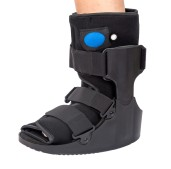
A pneumatic walking boot, commonly called an air walker, combines a rigid outer shell with an inflatable air-cell or bladder system positioned around the lower leg and ankle.
The air system allows trained users or healthcare professionals to modify internal compression and contact, subject to the product instructions. This may help accommodate changes in limb volume and refine fit during clinician-directed recovery.
Its suitability depends on fracture stability, soft-tissue condition, permitted weight bearing, skin status, sensation, user capability, and the treating healthcare professional's assessment.
Key Differences Between Air Walkers and Standard Walkers
Inflatable Air-Cell System
The defining feature of an air walker is its adjustable pneumatic system. Buyers should evaluate inflation access, valve durability, pressure retention, bladder placement, ease of adjustment, and the availability of replacement components.
Non-Pneumatic Support Structure
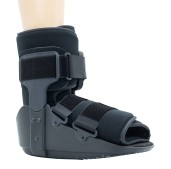
A non-pneumatic walker relies on its shell, liner, straps, and padding to create support without an inflatable bladder. The simpler component structure can reduce inflation-related failure points and may simplify training and inventory management.
Rigid Shell and Rocker Sole
Both designs commonly use a protective shell and a rocker-style sole. Buyers should assess shell coverage, sole geometry, tread, stability, weight, and whether the design is appropriate for the intended clinical protocol.
Liner, Padding, and Fastening Straps
Removable liners, padded contact areas, and adjustable straps influence comfort, hygiene, and fit in both categories. Liner material, strap reach, fastening strength, cleaning guidance, and replacement availability should be reviewed during sample approval.
Which Walking Boot Is Best for Ankle Fractures?
A pneumatic walker may be considered when adjustable internal contact and accommodation of changing limb volume are important. However, the inflation system adds components that require correct operation, inspection, and quality control.
A non-pneumatic walker may suit procurement programs that prioritize straightforward fitting, fewer mechanical components, easier staff training, and lower acquisition cost. It does not, however, provide the same type of adjustable air-cell interface.
What Should Hospital Buyers and Clinics Compare?
The best choice is not determined by a single feature. Procurement teams should compare clinical requirements, patient usability, device reliability, and total cost across the intended treatment pathway.
Clinical fit and indication: Confirm fracture type, stability, swelling pattern, permitted weight bearing, required immobilization, and compatibility with the clinician's protocol.
Pneumatic-system reliability: For air walkers, review valve function, pressure retention, bladder consistency, operating instructions, and procedures for identifying leaks or inflation failure.
Materials and durability: Compare shell rigidity, liner construction, padding, strap quality, outsole wear, fastener durability, and resistance to repeated application.
Sizing and workflow: Evaluate size coverage, left/right compatibility, fitting steps, adjustment time, staff training, patient instructions, and consistency across different body types.
Procurement cost: Compare purchase price, replacement parts, warranty terms, defect risk, staff time, inventory complexity, packaging volume, and expected service life.
Quality control: Ask about incoming inspection, shell and sole checks, valve and bladder testing, strap-strength testing, sizing tolerances, final inspection, and batch traceability.
How Can Buyers Balance Clinical Performance and Cost?
Sample evaluation should include both clinical fitting and procurement review. Teams can compare immobilization, perceived fit, inflation operation, donning time, walking stability, cleaning workflow, packaging, and labeling before approving a model.
Unit price alone may not reflect total cost. A lower-priced product can become more expensive if it creates fitting problems, frequent replacements, staff retraining, or inconsistent batches; a more complex air walker should also justify its added components for the intended use.
For mixed clinical demand, buyers may consider maintaining pneumatic and non-pneumatic options under clear selection criteria rather than forcing one model to cover every patient and protocol.
Looking for a Walking Boot Manufacturer?
Xiamen Huakang Orthopedic offers pneumatic air walker and non-pneumatic walker solutions for hospitals, clinics, orthopedic distributors, and rehabilitation product suppliers.
The products shown feature rigid protective shells, adjustable fastening straps, padded liners, and rocker-style soles; the air walker additionally includes a visible inflation control. Please refer to approved specifications and samples for confirmed materials, sizing, air-system design, and performance details.
Contact our team to discuss product specifications, samples, size assortments, pneumatic and non-pneumatic options, packaging, labeling, quality-control requirements, and OEM/ODM cooperation.
Disclaimer: This article is for general product and sourcing information only. It does not replace professional medical advice. Fracture assessment, product selection, fitting, inflation adjustment, weight-bearing status, and use should follow the guidance of a qualified healthcare professional.


